


WHO IS DANIEL DOWNEY
My name is Daniel and I am a a man from Ireland of many different sides. I come from a small town in Ireland called Cavan but have lived and travelled in over 50 countries around the world. I rarely return to the same country twice but I have reason now to return to Turkiye
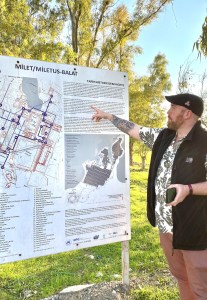
My background is in philosophy and I have a greta love of people, history and culture. For me, understanding he history of a place is to understand the story of a people and their past can lead to a better view of the present and maybe future.
Personally my aim to come to Bodrum was two fold: to enjoy the beauty of an ancient place and to understand the REAL birthplace of philosophy, Miletos.
Though in the west we are told philosophy starts with Socrates, Aristotle and Plato, in fact it starts in Turkey with Thales and so my journey brought me here from my philosophy love to its most ancient roots.
WHAT IS THE HISTORY OF HALICARNASSUS
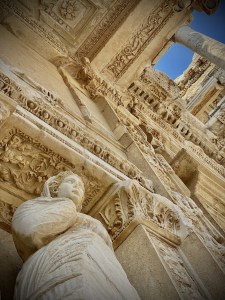
The story behind Bodrum is older than the story of Halicarnassus. Originally a people called The Lesges came from the east, from Anatolia event before the war in Troy. These people came even before the Hittite and arrived at the sea, making homes in what would become known in later times as Halikarnassos and Miletus. The Lesges arrived to the Aegean and spend across the waves, colonising places like Crete. Then they were pushed back. The Minoans took Crete and the Lesges returned to the coast of Anatolia.
They fought with the Hittites against the Egyptians in one of the oldest battles, at Kadesh. Then they fought with the Trojans at Troy. When they lost, they fled south. They made their settlements in the mountains above Bodrum and their tombs are still here today.
Some believe their last great strength were that they became one of the ’sea peoples’ who destroyed the Hittite Empire.
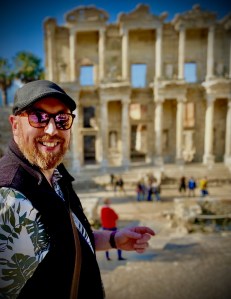
The Lesges remained a hidden people until the coming of Alexander the Great when he besieged Hellikarnassos and invited them to come down from the mountains and live in the city with the others. Under him, they would live safely under their Queen Ada, now they were called Carians.
The Lesges and Greeks remained at Helicarnassus under Alexanders empire and then the Roman Empire after, the Byzantine and then The Ottoman and now the Turkish civilisation, where it is now called Bodrum.
The story of this city, this peninsula is as old as the story of human civilisation and worthy of honouring, understanding and respecting.
WHY MILETOS IS IMPORTANT

The Meander River is an artery of water in ancient times that flows from the Hittite Anatolian lands toward the sea. Along this artery flowed the blood of the Lesges and they founded the settlement of Miletos. After their defeat at Troy, the fled south away from the now powerful Greeks to find safety in the mountains of Bodrum. Some remained and lived under Greek rule in the city, which became an important place on the Aegean.
Then around 2700 years ago, a long time before Socrates or Plato in Athens, the first philosopher was born in Miletus, Thales. In this city, not in Athens, philosophy was born. It was from him that Western philosophy spread across the world. Many other famous thinkers were born and lived here and even the Roman Emperor Marcus Aurelius, the Philosopher Emperor, made a pilgrimage here and built a large baths for the people of Miletus.
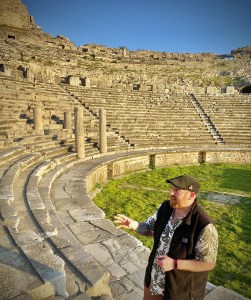
If Ephesos is the touristic centre of Aegean history, Miletos is the cultural and philosophical centre, as rich in intellect and thinking as any other city in history.
In time, as the sea left the Milesians, the city was deserted and became a ruin.
Today the Miletus we know today is mostly forgotten but work is being down to remember this as one of the worlds most important cultural sites.
WHAT ARE YOUR THOUGHTS ON EPHESUS AS ONE OF THE SEVEN WONDERS
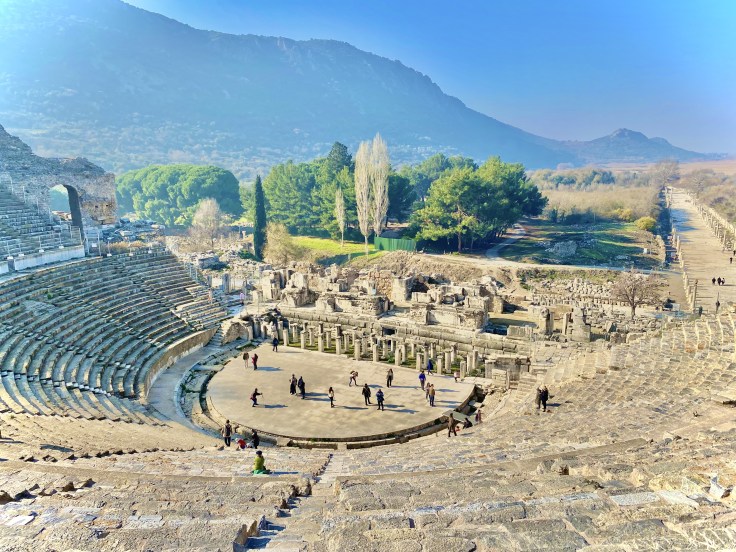
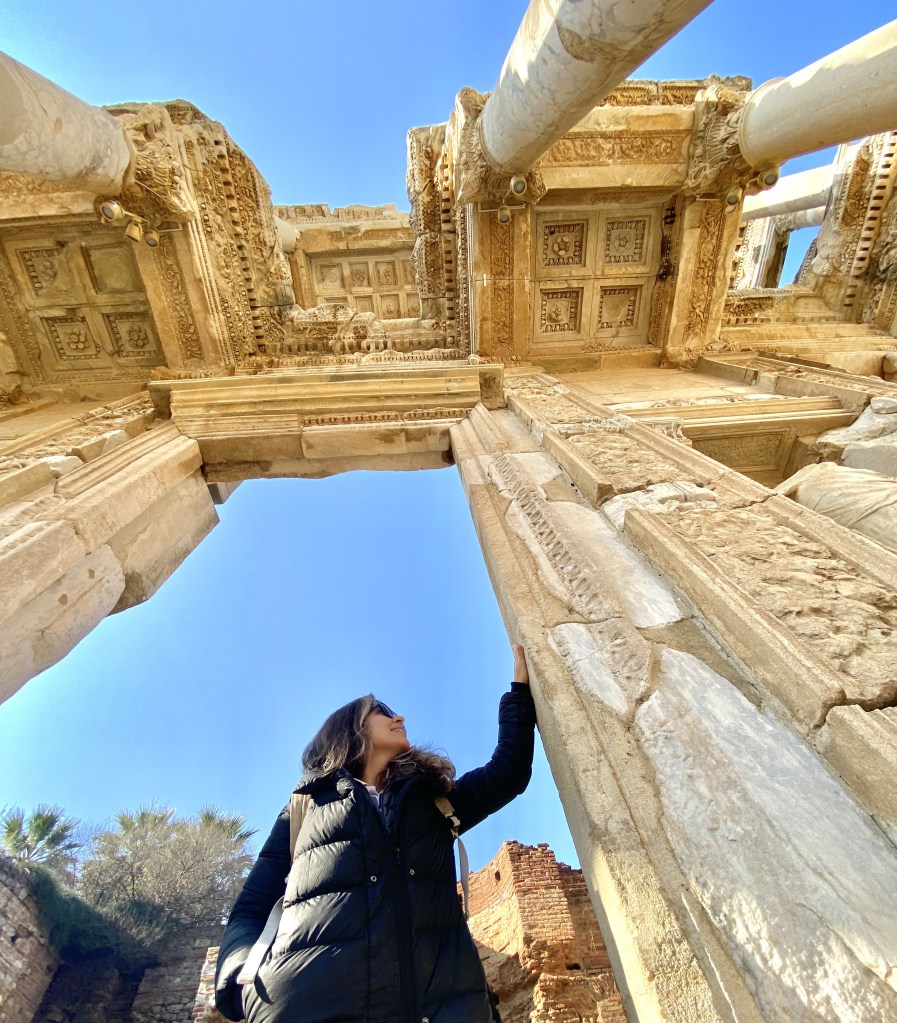
I believe the site which holds the wonder the Temple of Artemis is one of the most beautiful examples of classical architecture still around today. For humans to create such fine craft thousands of years before machines is nothing short of a miracle. I do believe Ephesus is a wonderful place to visit but is perhaps shining so bright as a touristic place today that other amazing sites such as at Miletus are being put in shadow. A good tourism initiative would be to spread the interest of Aegean Turkish tourism branding for the history into other sites and not only Ephesus. This could be seen on our recent trip, where hundreds of people were everywhere at Ephesus but only 3 others people were in the spectacular sites of Miletus.
WHY ARE THE LELEGES A FORGOTTEN PEOPLE
There is a simple answer to this question….Troy.
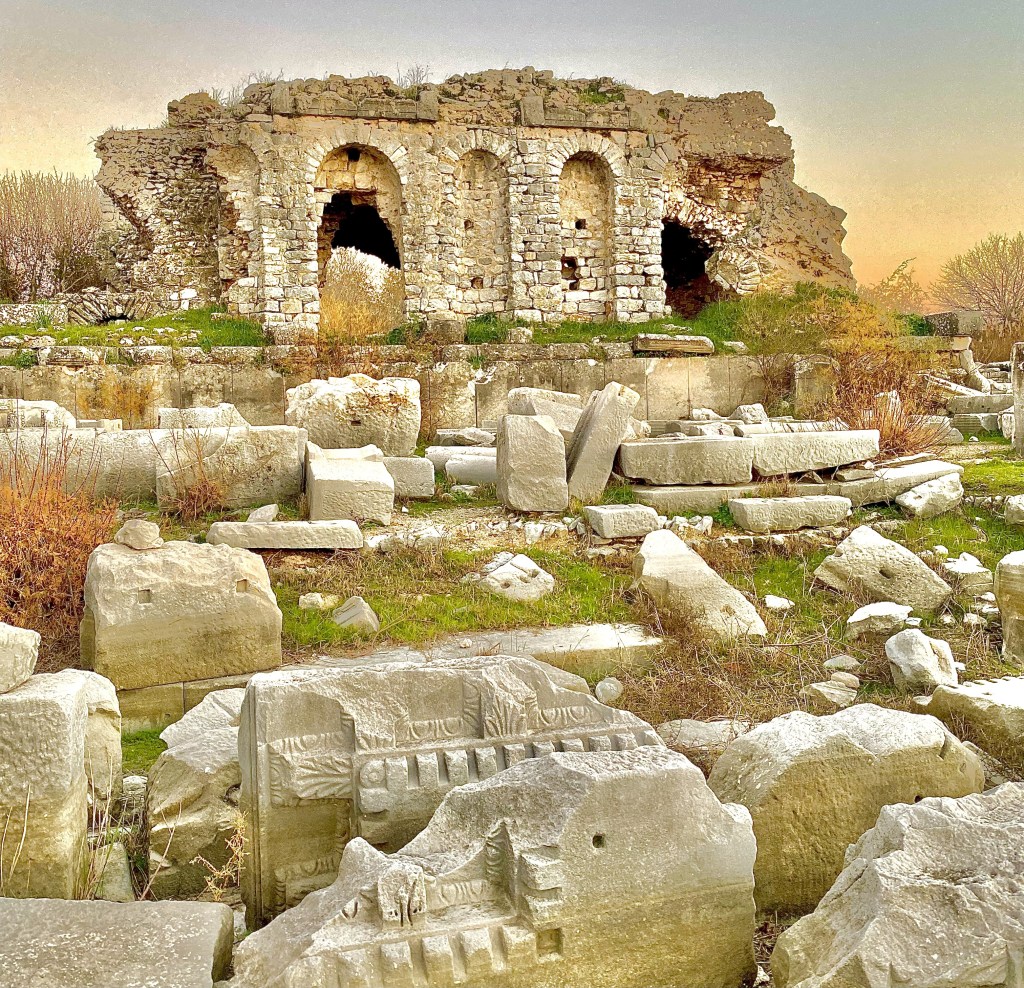
Before Troy the Lelegs were a strong and rich sea faring culture spread all across the Aegean but they were on the side of Troy in the Trojan war and therefore they declined as the Greeks arose as a power in the region. We can see their retreat in the face of Greek advancement in Minoa where Lesges were there before the Minoans and again at Miletus where the Greeks replaced the Lesges. One of the last refuges of these enigmatic people were the hilly uplands of Bodrum where in their dark times they evolved from Lesges to Carians.
I believe the Lesges were forgotten because they were on the losing side in the Trojan War and the victors write the history, and so the Lesges, an Anatolian peoples who became a sea peoples of the Aegean began to be forgotten and faded from memory.
But their whispers can still be heard in the wind above Bodrum, their tombs still lie unexplored in the deep forests in the craggy heights above the place once called Hallicarnansus.
TELL US ABOUT YOUR TIME WITH THE LELEGS GHOST
I decided to spend a full day hiking the spine of the mountains that form the back of the Bodrum peninsula. The cooler air was a relief for my Irish skin and the shadowed tree cover was wonderful. I hiked in total silence without another soul for company and in my footsteps I imagined what these places looked like when the villages were alive here.
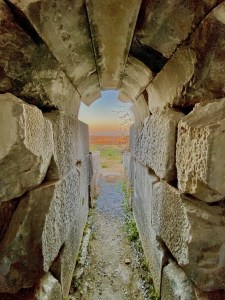
After exploring several tombs I took seat on a green field overlooking both the bays to the north and south, a great vantage point for a people fleeing the Greeks. There I imagined what it might be like to have a conversation with a ghost of the Leleg people, what we might say to one another. In the Turkish sunshine, the Aegean breeze running through the Anatolian trees I sat and constructed a poem based on what this conversation might be like. It is a homage to the Leleg people whom I want to honour and remember, as I feel sad that they are perhaps too forgotten to history, these original sea settlers of The Aegean.
 EDA CAGLAR
Leave a comment